

Don't Fear Biogas: It's Most Likely Safer Than Your Septic Tank!
There are a lot of public misconceptions about agricultural biomethane installations, yet many of these same people have septic tanks at home.
By way of introduction consider the following system. It is from a company in India and is a biogas production system and septic tank in one:
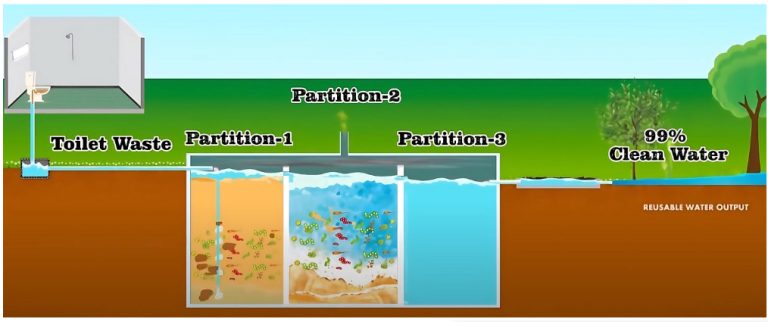
In this article, we will show you a comparison between the preparation, installation and monitoring of both, and how biogas installations are held to a much higher standard.
What are agricultural biomethane installations?
Agricultural biomethane installations are systems that produce renewable natural gas (RNG) from organic waste such as animal manure, crop residues, food waste, etc. The process involves anaerobic digestion, which is the breakdown of organic matter by microorganisms in the absence of oxygen. The result is biogas, a mixture of methane, carbon dioxide and other gasses.
Biogas can be used directly for electricity and heat generation, or it can be upgraded to biomethane by removing carbon dioxide and other impurities. Biomethane has the same quality and properties as natural gas and can be injected into the gas grid or used as vehicle fuel.
What are septic tanks?
Septic tanks are underground containers that collect and treat wastewater from households that are not connected to the sewer system. The wastewater flows into the tank, where solids settle at the bottom and form a layer of sludge.
The liquid layer above, called effluent, contains organic matter and pathogens that need to be further treated before being discharged into the environment. The treatment usually involves a drain field, where the effluent percolates through soil or gravel and is filtered by natural processes.
How do they compare?
Both agricultural biomethane installations and septic tanks use anaerobic digestion to treat organic waste, but there are significant differences in terms of preparation, installation and monitoring.
Preparation:
- Agricultural biomethane installations require careful planning and design to ensure optimal performance and safety. The feedstock needs to be collected, stored and pre-treated to achieve a suitable moisture content, particle size and chemical composition. The digester needs to be sized according to the feedstock quantity and quality, as well as the desired biogas output and quality. The upgrading system needs to be selected based on the biogas composition and the end-use requirements. The gas grid connection or the vehicle fueling station needs to be arranged with the relevant authorities and operators.
- Septic tanks require less preparation, but they still need to comply with local regulations and standards. The tank needs to be sized according to the number of people using it and the water consumption habits. The drain field needs to be designed according to the soil type, slope and groundwater level.
Installation:
- Agricultural biomethane installations are complex and costly projects that involve multiple contractors and stakeholders. The installation process includes site preparation, civil works, mechanical and electrical works, piping and wiring, commissioning and testing. The installation time can vary from a few months to a few years depending on the scale and complexity of the project.
- Septic tanks are simpler and cheaper projects that involve fewer contractors and stakeholders. The installation process includes digging a hole, placing the tank, connecting the pipes, covering the tank with soil, installing the drain field and testing. The installation time can vary from a few days to a few weeks depending on the site conditions.
Monitoring:
- Agricultural biomethane installations require constant monitoring and maintenance to ensure optimal operation and safety. The feedstock supply, the digester temperature, pH, pressure, biogas flow rate and composition, the upgrading system performance, the gas quality and quantity injected into the grid or used as vehicle fuel need to be regularly checked and adjusted. The digester sludge needs to be periodically removed and disposed of or used as fertilizer. The system needs to comply with strict environmental regulations and standards regarding emissions, odors, noise, etc.
- Septic tanks require less monitoring and maintenance, but they still need to be inspected and serviced every few years. The sludge level needs to be measured and pumped out when necessary. The drain field needs to be checked for signs of clogging or leakage. The system needs to comply with basic environmental regulations and standards regarding effluent quality, groundwater protection, etc.
Why are biogas installations held to a higher standard?
Biogas installations are held to a higher standard because they produce a valuable product that can replace fossil fuels and reduce greenhouse gas emissions. Biogas installations also have a higher potential for environmental impacts if not properly designed, operated or maintained.
Biogas installations need to meet rigorous technical specifications and quality standards for gas production, upgrading and injection or use. They need to follow strict safety protocols and procedures to prevent accidents such as explosions or fires. Biogas installations need to adhere to stringent environmental regulations and standards regarding emissions, odors, noise, etc.
So, there is little to be worried about.
As you can see from this comparison, agricultural biomethane installations are not more dangerous or harmful than septic tanks. In fact, they are more beneficial and sustainable, as they produce renewable energy from waste and reduce greenhouse gas emissions.
Agricultural biomethane installations are also more regulated and controlled, as they have to meet higher standards and expectations. Therefore, there is little to be afraid of when it comes to biogas installations. They are safe, clean and green.